

Pathological Persistence
Throughout Navy SEAL training, candidates are constantly told they won’t succeed and don’t belong there. The BUD/S (Basic Underwater Demolition/SEAL training) instructors’ mission is to weed out those who would quit when the going gets tough; an option that is not available when you’re in the field. They taunt, and they scream, and they do everything short of killing you to get you to quit. When you’re faced with insurmountable odds, what will you do?
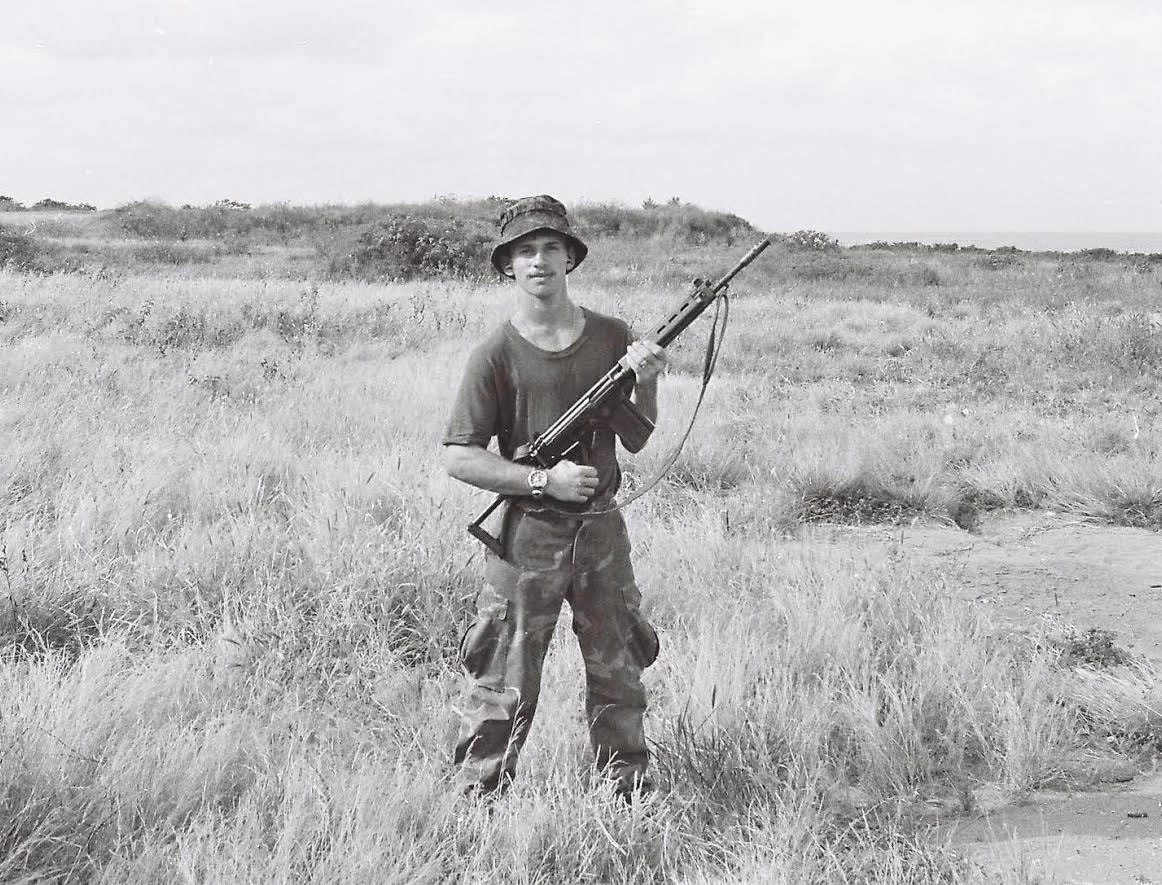
David in Ecuador with Seal Team 4
The Littlest SEAL
Standing at 5’3, and 110 pounds, David Brown stepped into the office of the Navy SEALs looking for purpose. The military wasn’t what he planned when graduating high school, and he knew absolutely nothing about the Navy SEALs, but when his parents told him they couldn’t pay for college, he had to find an alternative option.
David came from the coal mining town of Wilkes-Barre, Pennsylvania. Claiming his spot as the smallest in his class, he quickly learned that survival would mean learning how to defend himself. His mother, a “fiery Irish woman,” as he describes her in his book And Goliath, taught him both how to fight back and where to aim.
“Right in the kisser,” she would say. David grew older but not much taller, a fact that made him an easy target for jokes from classmates and, occasionally, his teachers. He briefly joined the high school football team, eager to partake in the camaraderie and excitement of the game.
The physical requirements quickly pressed down on him, and he ultimately decided to hand in his gear and quit the team–a decision that haunted him all the way to BUD/S training. He eventually found his stride on the wrestling team, and went on to win the Regional Championship with an injured arm.
The determination and willpower he learned on the wrestling mat that day proved invaluable when he later faced the brutality of BUD/S training.
When you request to join the Navy SEALs, there is a physical test you must take before you are sent to BUD/S. This determines your ability to withstand the grueling six months you must endure to become a SEAL. At age seventeen, David was the only person in his group who qualified to go.
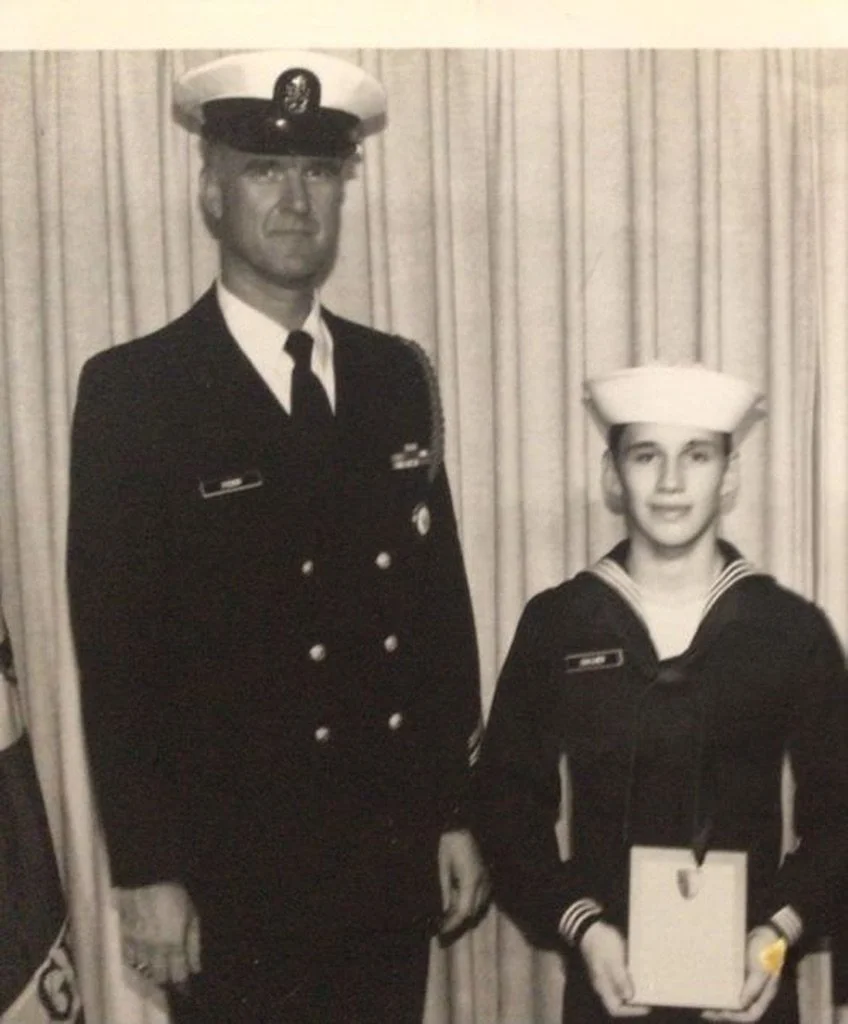
At his Navy boot camp graduation, he was awarded the Navy League Award, and only his brother Leo was there to watch him receive it. His parents didn’t know what he was doing, or what he went through, until years after he left the Navy. His decision to go, and the determination to stay, came from deep within himself.
“It’s in my blood, I just had that mentality,” he explained. He noted that his family history is littered with military men, from soldiers who served in the Netherlands in the 1800s, to his uncle who was a tank commander in the Korean War.
He had spent his childhood playing soldier in the woods with Leo, and even took an interest in scuba diving, taking his first lesson at a nearby lake. He was a regular at the hospital due to his proclivity for dangerous adventures.
He wasn’t necessarily born to be a SEAL, but you could certainly argue he was bred to be.
But BUD/S training wasn’t a high school football field, or a wrestling mat. This was a beast of epic proportions, and it was hungry for fresh meat. David would be pushed to his absolute breaking point–and beyond.
Evolutions
During his third week in BUD/S, he was injured and had to be pulled from the program; he had literally run himself into the ground. He developed shin splints—tibial stress fractures—and a torn groin muscle from the brutal daily hikes, long runs, and other physically demanding tasks.
Due to his unwillingness to quit, they allowed him to be rolled back (he could start training again from the beginning once he had recovered from his injuries). He spoke to me about his “pathological persistence” during my interview with him.
“When I got to BUD/S I realized I had been through the failure part (giving up on football), and I never wanted to feel that again.” He went on, “In BUD/S, they look for weakness in everybody. If they see a weakness, they are going to exploit that and try to get you out of training because you can’t have a weakness in battle when other people's lives depend on you.”
“I had to convince myself that the only way that they could get me out was if they killed me.” As we continued our conversation, I learned that “quitting” and “failure” aren’t in David’s vocabulary. “I don’t quit or fail,” he explained, “I just haven’t succeeded yet, but I know I’m going to.”
He told me that he wouldn’t think about everything he had to get through to complete training and become a SEAL. “I just thought about getting to the next evolution (a training exercise).” It reminded me of what my mother used to say: “How do you eat an elephant? One bite at a time.”
David ultimately completed BUD/S training and graduated as a member of Class 115. Over the next year, he would be sent to train with teams from all over the world.
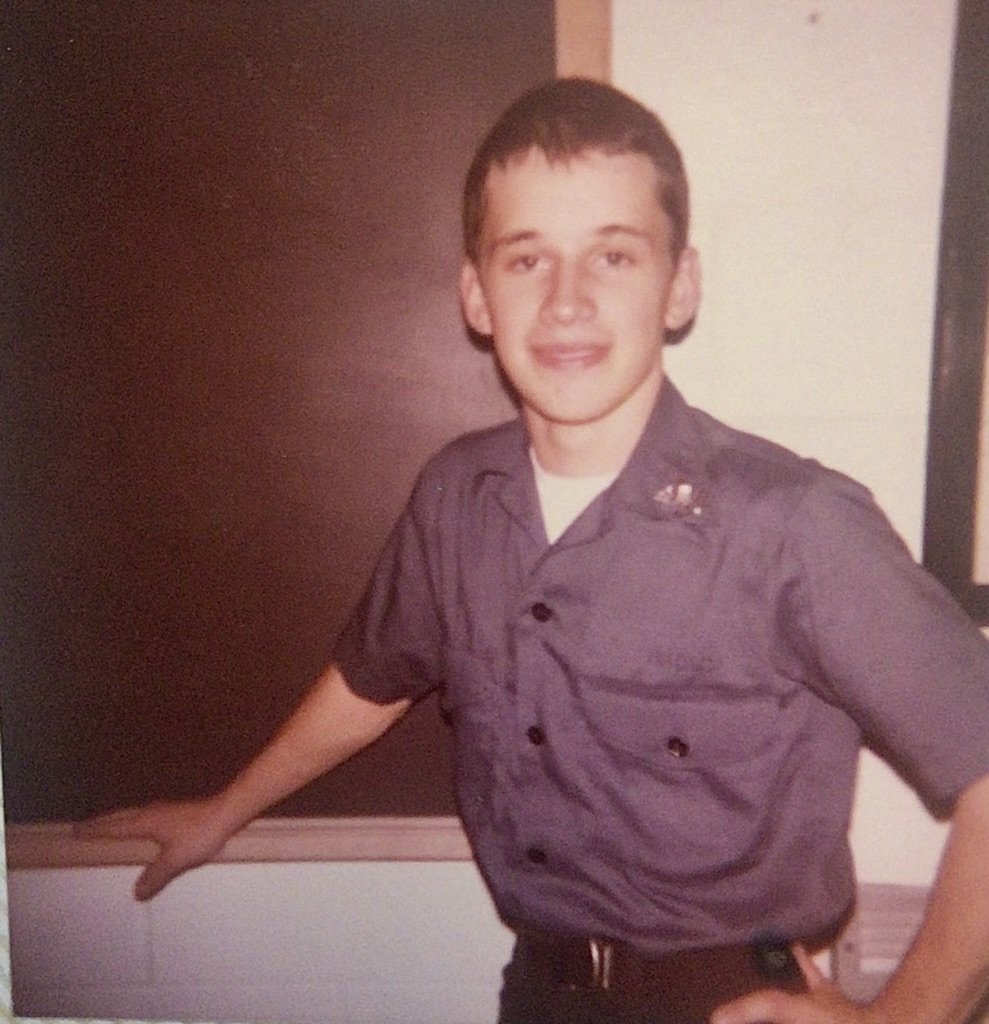
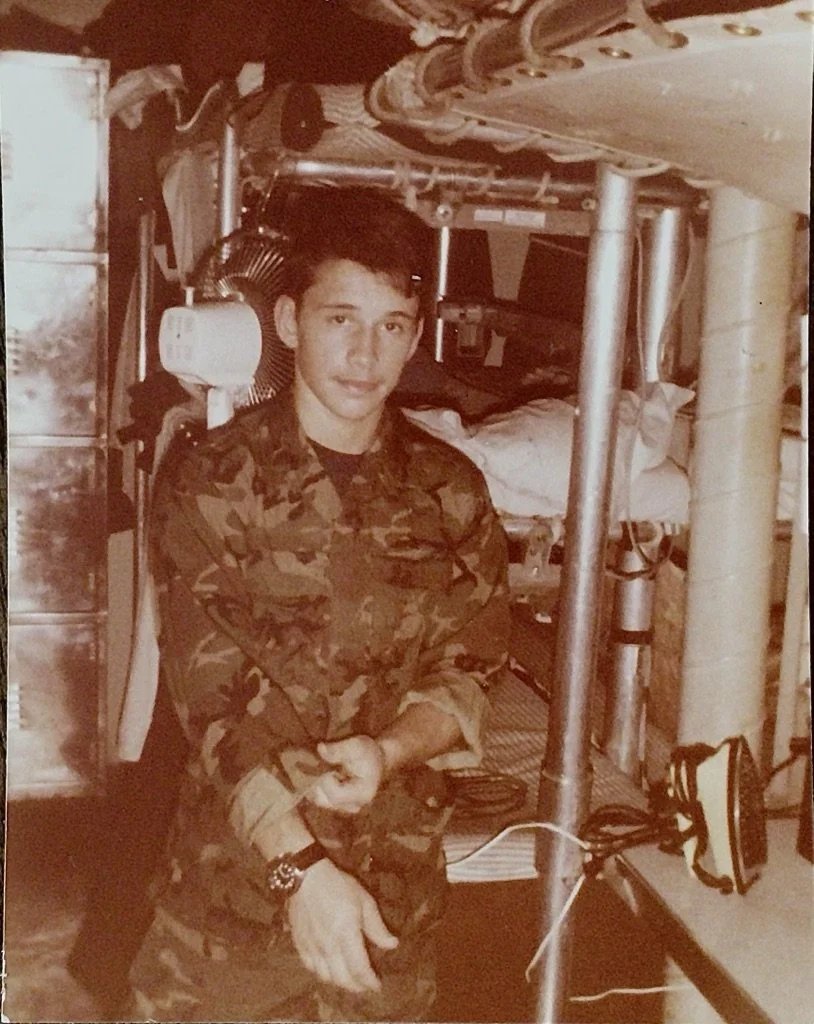
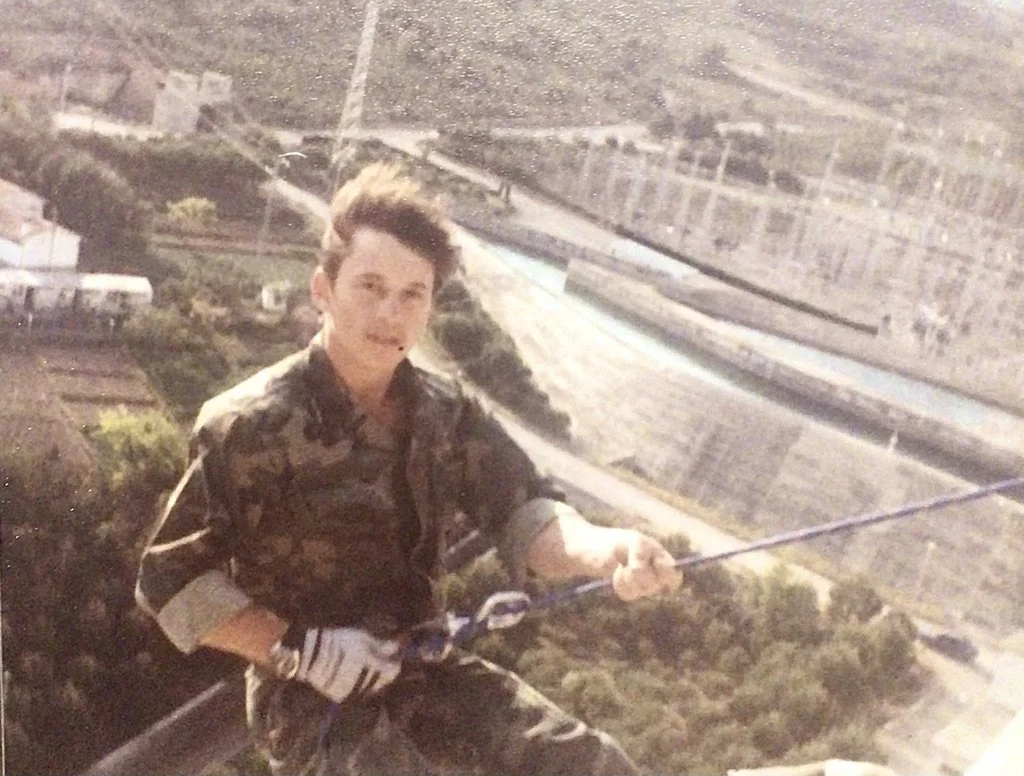
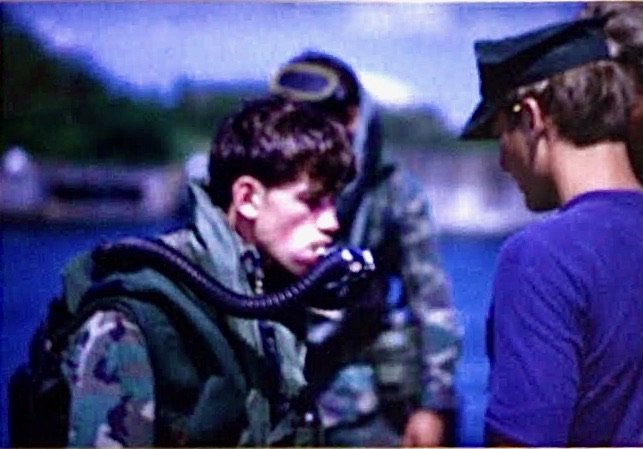
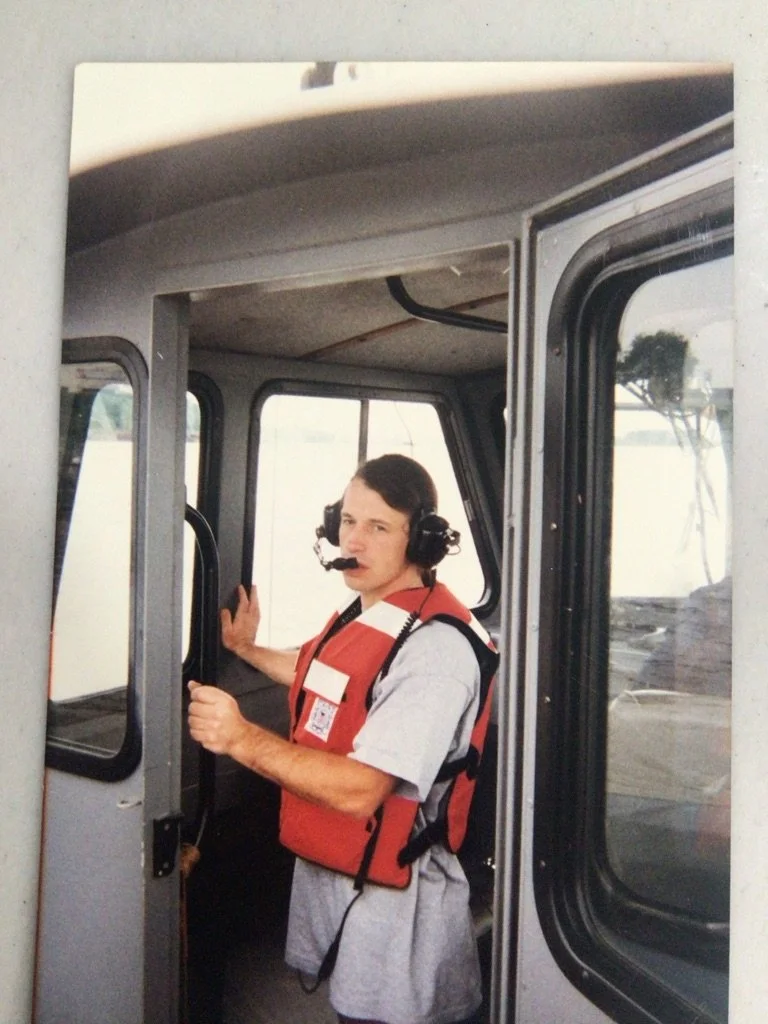
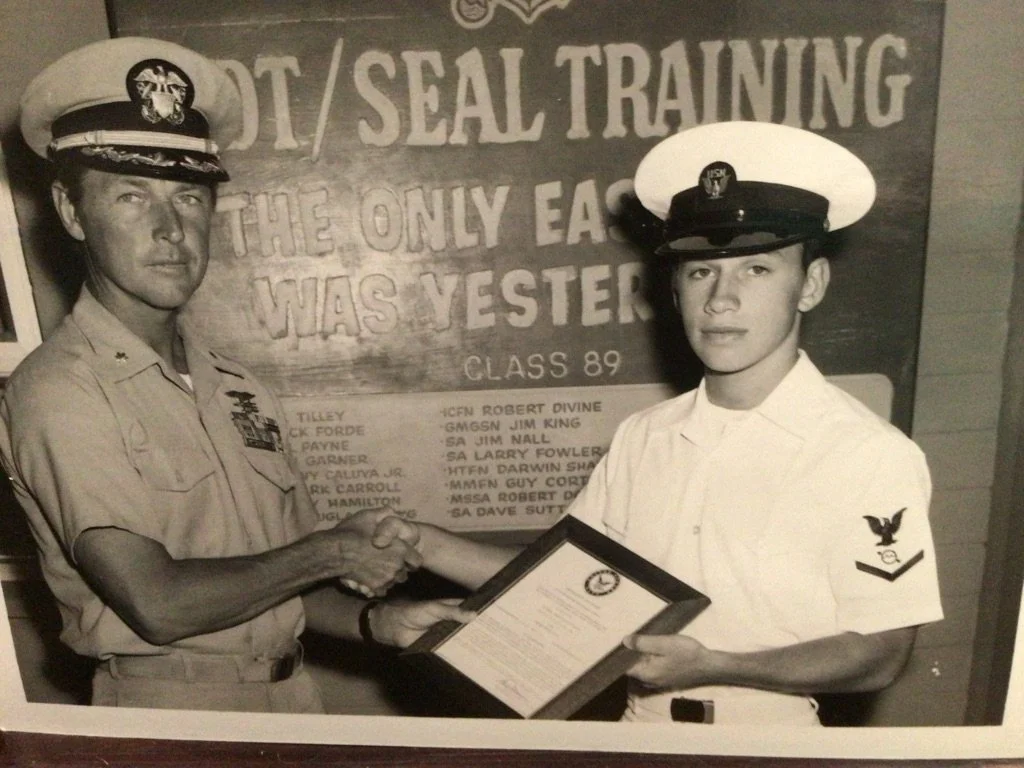
What I didn’t realize was that because the U.S. fields some of the world’s most elite warriors, our troops are deployed around the globe to help train allied forces. “We're the best, and we're trying to increase the proficiency and efficiency of our allies. So if we do have to go to war, we know what their capabilities are,” he explained.
Among dozens of stops around the world, he would train with the Green Berets in Spain, do closed-circuit dives in Puerto Rico, and conduct cast and recovery operations off the coast of Colombia. His teammates called him “Brownie,” and he was now a respected member of the world's most elite and highly trained operatives.
Being Human
David and his high school sweetheart, Mary, were married shortly after he completed training, and they would later welcome a baby girl into the world. David described to me the difficulty of balancing a home life with his work. “They didn’t teach you how to be a human while at BUD/S, all you know is getting amped up for doing missions.”
“I'm a little boy from Wilkes-Barre, Pennsylvania, and within a couple of months they're handing me a machine gun and telling me, ‘You're going to be doing these missions all over the world. Oh, and by the way, it's your wife's birthday. Make sure you take care of that and get the groceries on the way home.’”
We reflected on the sad reality that the military offers little to no reintegration training for service members returning to civilian life. David explained that he had to teach himself how to be “normal” again after leaving the SEALs five years later.
He got a job working for NCIS as a federal agent and later as an investigator for the Environmental Protection Agency. Not only that, but he earned his Bachelor of Science degree in Criminal Justice and graduated from the Center for Creative Leadership and the Federal Executive Institute.
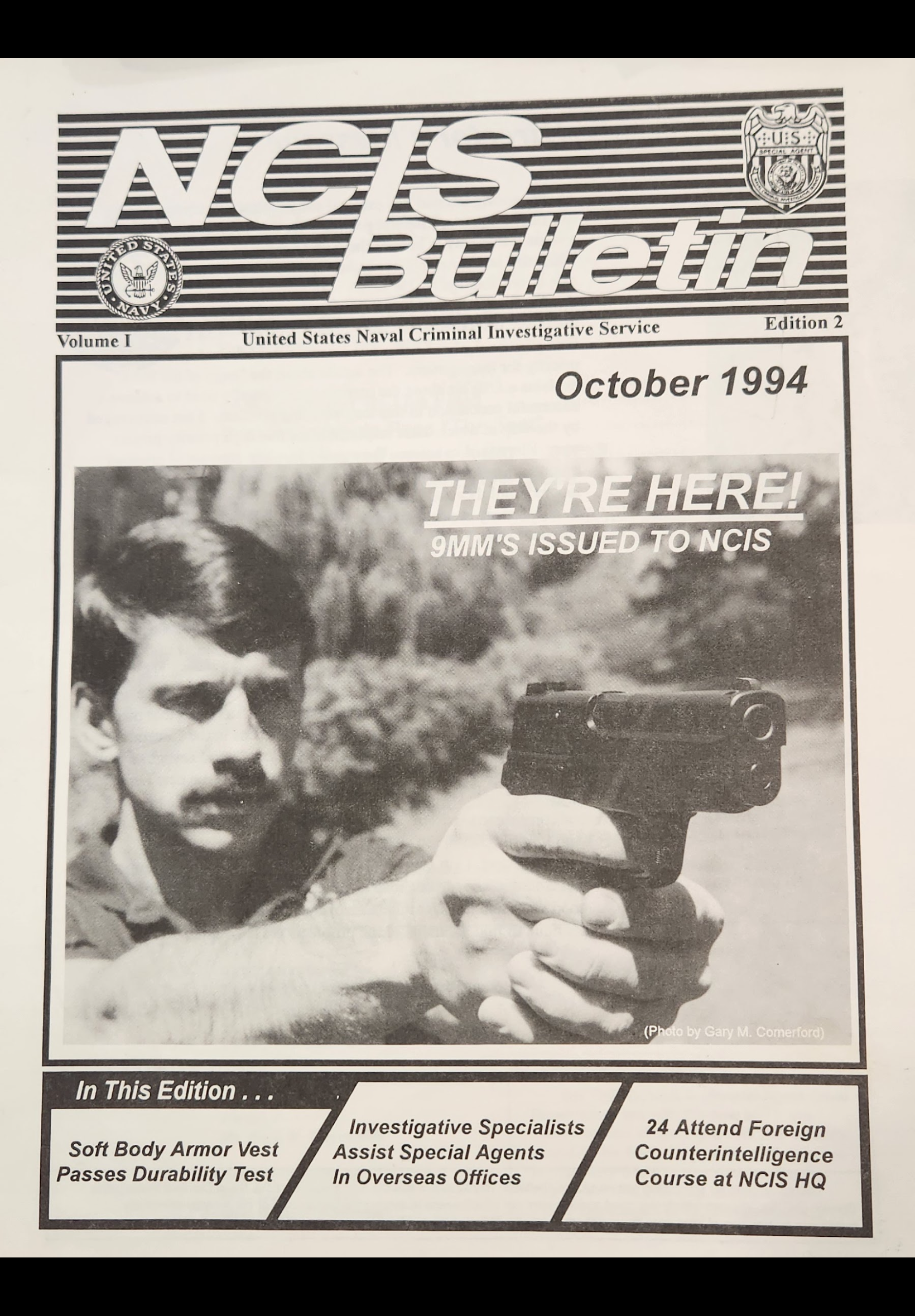
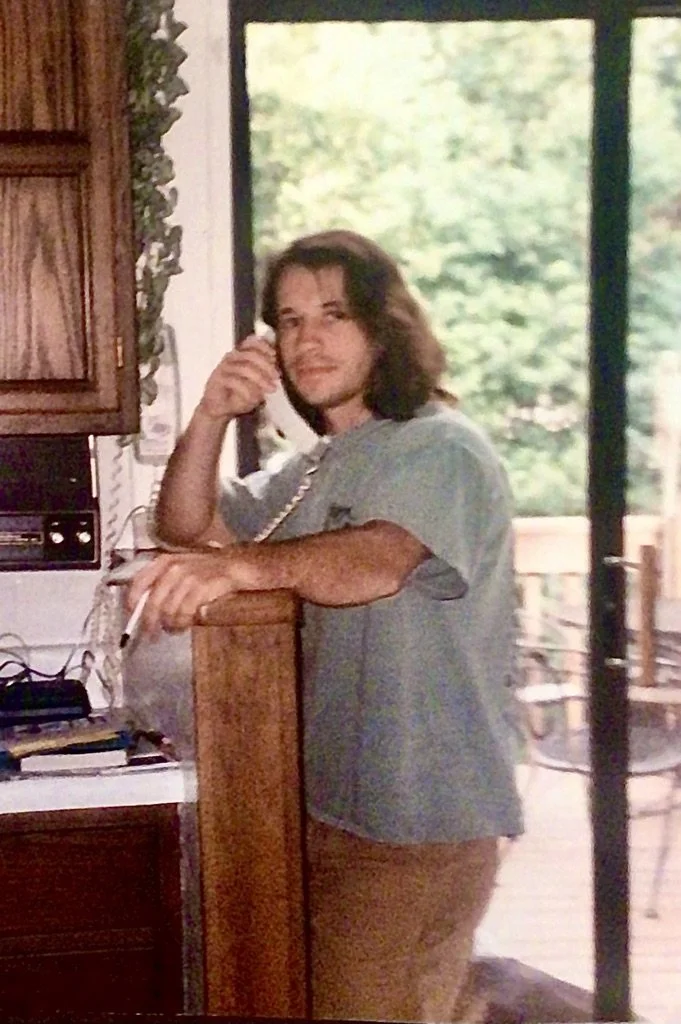
He also completed leadership training at Harvard’s Kennedy School through the highly regarded Senior Executive Candidate Development Program. I asked him what he learned about leadership during his time in the program.
“Leadership is not a title. Leadership is a verb. It’s an example,” he said. Yes, everybody wants to be a boss, but few are built to be a leader. That verb is the difference between effective management, and dictatorship.
Throughout his career, David achieved remarkable things and was trained to push forward regardless of the circumstances, always fixing his gaze on the next evolution. But when his wife Mary had him served with divorce papers after twenty-one years together, and he was kicked out of their home, he found himself navigating an unfamiliar wilderness alone.
“I used to say, ‘I don't need anything. I could be out in the woods naked with a Ka-Bar (a military-issued combat knife). Send me in the woods with a Ka-Bar and I'll survive.’ Figuratively, I was at that point in my life. I had nothing.”
Not long after this, he met a wonderful woman named Dina and they began to date. At the time, he was living out of his truck while his divorce was finalized. Dina took him in and gave him a home, saving him from his mental wilderness.
In a heartbreaking turn of events, Dina would pass away only months later, after a long battle with breast cancer. David spoke about this moment in his book:
“She had told me about her breast cancer when we met, but we both thought it was in remission.”
David was devastated and had come to the end of his rope. Due to the stress and grief he was experiencing in his personal life, his work began to suffer, and an internal investigation ensued.
He had been trained to run, jump, swim, shoot, and kill, but he hadn’t been prepped for this. In his book, David quotes Winston Churchill’s famous words, “When you’re going through hell, keep going.” Ultimately, his pathological persistence carried him through what proved to be the lowest point in his life.
He applied the same thinking to grief, survival, and rebuilding his life. In his book, he says, “What do Teams do when they’re not in war? They prepare for it.” I asked him what practical things one could do when faced with an impossibly difficult scenario, such as the ones he described.
“Meditation is a great way to prepare for when those tough times come. Meditation and mindfulness. Once you take yourself out of everything that’s going on around you, you realize nothing else really matters in that moment.”
Psalm 46:10 says, “Be still, and know that I am God.” An age-old technique–meditation; one that has been used for centuries as a means to calm the body and mind, and bring about a sense of peace, regardless of your surroundings. To be able to calm your mind and think of only God, or nothing, requires an immense amount of focus, which takes practice.
David challenges himself even in meditation and relaxation; it’s as if a life without constant effort is unimaginable to him. He is a frogman, through and through!
Hoo-Yah, Thespian!
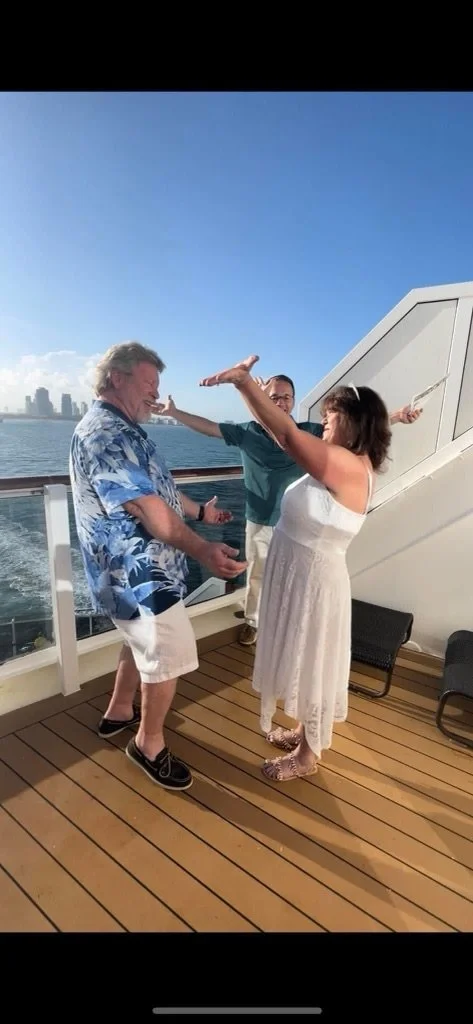
So what comes next for a federal agent and Navy SEAL? Well, David was blessed to meet another incredible woman in Sheryl, whom he is now married to. He retired from the federal government at fifty-two and started looking for new challenges.
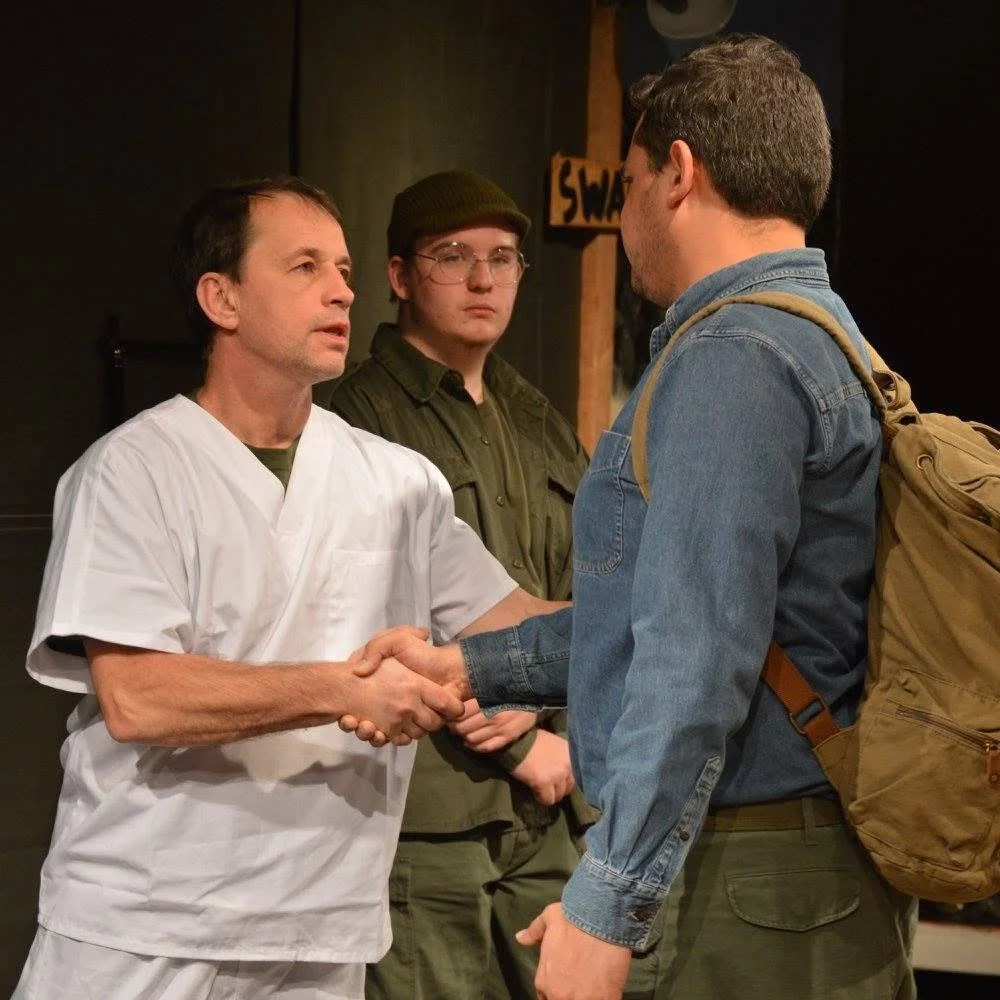
“I'm an introvert–I really avoid crowds and people. So what's the one thing that would make me uncomfortable, I knew nothing about, and it was a big challenge? Theater–being on stage; something that repulsed me, but at the same time intrigued me.”
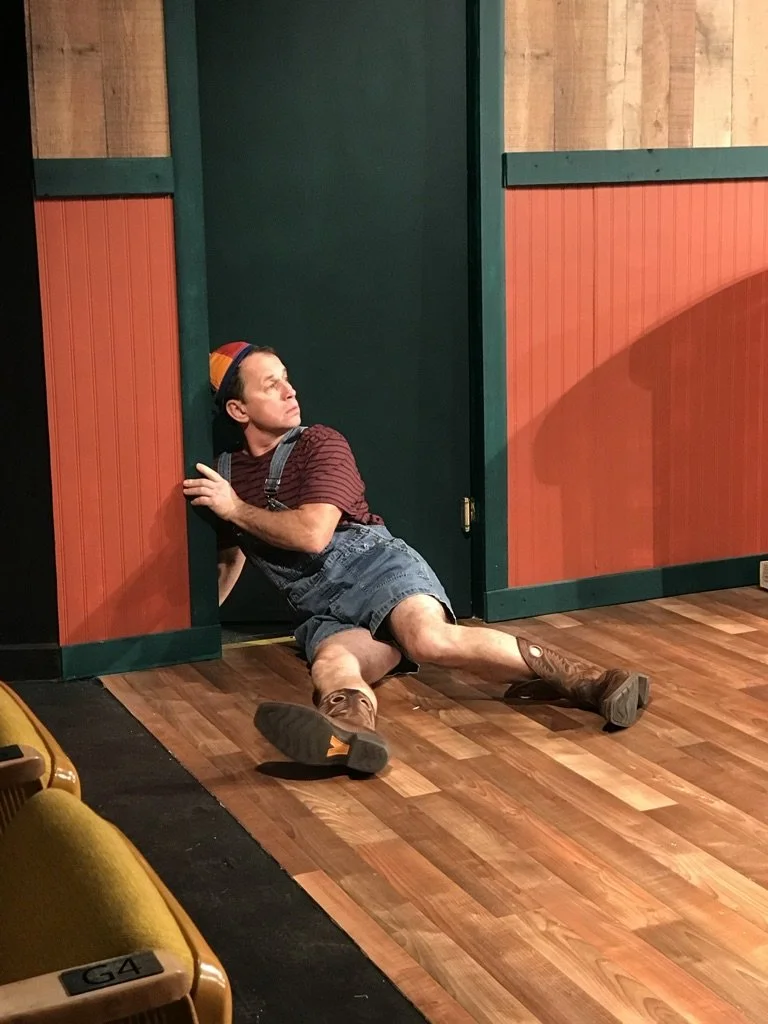
I met David through my stepfather, Paul, who starred alongside David in “A Tuna Christmas” at the Navasota Theater Alliance this past year. I was shocked when I learned about David’s time with the SEALs.
Here’s this guy, dressed head to toe as a curvaceous woman, and fully in character. When I tell you my jaw dropped when I found out he was a former Navy SEAL and NCIS agent, my jaw DROPPED. I had to interview him.
After speaking with David, it was clear to me that performing in that way was truly a challenge for him, and one that he bent to his will in no time. “I encourage everyone to do those things that are outside your comfort zone because you become a better person in a lot of different ways.”
Adding “thespian” to his already lengthy resume apparently wasn’t enough. Just for kicks, David also became an ordained minister and was a member of a professional waterski performance team in the Midwest for a time.
After spending decades in the fast lane, I was naturally curious how he adjusted to retired life. “Becoming a SEAL wasn’t the pinnacle of my life. I had other things I needed and wanted to do. I tackle life with the same vigor as I did before. The difference is now I'm enjoying the journey, whereas before I took it for granted.”
He went on, “I was not happy when I retired, and I couldn't figure out why. I've done all these great things, but I never celebrated them. I never took the time to look back and smile at myself and the achievements. But now I do.”
How does one of the most highly trained individuals our military has to offer define happiness, or success? I think David sums it up nicely.
“If you feel you're successful, you are. In everything I do every day, I feel like I'm successful simply because I got up and I did something. If there's a big reward at the end, great! But I’m also happy in the process. You have to enjoy the journey, not just the destination.”
David now lives in Sanford, Florida with his wife Sheryl. He spends his time restoring cars, cycling, and writing books, and stars in the occasional local theater production. He still finds ways to push his body further and challenge his mind.
“I look at the difficult things as challenges to enjoy. They motivate me and I get endorphins from them. The tougher the challenge, the more rewarding it is in the end,” he said with confidence.
Through all the years, missions, and positions he held, there was one thing that he took away from it all. “Celebrate your victories, whether big or small. Take a step back, breathe, and look at yourself and the situation. That’s where you find true happiness. Until you do that, you’re constantly going to be trying to achieve something that someone else has told you will make you successful or happy.”
We established it as the “stop and smell the roses” mentality. It goes hand-in-hand with being mindful and meditative; taking time to breathe and recognize where you are, and how far you’ve come.
David Brown released his book, And Goliath; The Littlest Navy SEAL’s Inspirational Story About Living Your Biggest Life, in 2025. It features a review from Admiral Bill McRaven, who was David’s Officer in Charge at the time, but would later become the architect for the mission that eliminated Osama Bin Laden in 2011.
He goes into more detail regarding his time with the Navy, NCIS, and shares many personal revelations that are both profound and inspiring.
“When I wrote this book, I wanted to tell a story, but I wanted to try to understand the reasoning behind why I became the person I became. But, I didn’t want it to just be a collection of stories–that didn’t seem compelling to me. I wanted to write something that I felt would help someone who read it.
“I wanted it to motivate them if they are having a tough time in their life. In a subtle way, through some of the stories I tell, I wanted the reader to see themselves in similar positions throughout their life, and hopefully it would answer some questions for them.”


Final Thoughts
David’s parents were, at best, indifferent to his achievements. While his mother had taught him to fight and stand up for himself, there wasn’t anything in particular in his childhood that he could point to that would indicate where his future would take him.
In chapter 3 of his book, David talks about behavioral geneticist Robert Plomin, and he quotes his book Blueprint: How DNA Makes Us Who We Are.
“Genes are not destiny, and heritability describes what is, not what could be.”
Essentially, he was the author of his life story. It wasn’t up to his parents, his genes, or anything other than himself.
“Only you have the right to judge, because only you know what you are capable of,” David says in the epilogue of his book. “The reality is that we create the reasons everything can be achieved.”
So what do you do when faced with insurmountable odds? “That dream that you have is not achievable. You’re wasting your time.” “You’re not good enough to make it.” “You can’t do that, you're too XYZ.”
There’s always a reason not to do something, and those reasons will often make themselves known. When I finally decided to start this blog, the screaming instructor telling me to quit was coming from my own mind. Oftentimes, you are your own worst enemy.
Maybe you’ve been telling yourself that you’re not good enough because someone a long time ago told you you weren’t. I’m sick and tired of being a prisoner to everyone else’s opinions of me. Opinions are personal, and they’re none of our business.
There’s no better time than the present, if I may be so cliché. If we are to be alive today, what might we do with what we have? What little successes can we achieve today so that tomorrow we have a foundation to build on? Your genes aren’t your destiny, you don’t have to be what your parents were, and you don’t have to be what you think you’re “supposed” to be.
“Do not follow where the path may lead. Go instead where there is no path and leave a trail.” -Ralph Waldo Emerson (another great quote which I stole from David’s book.)
And Goliath is available for purchase on Amazon, at Barnes and Nobles, and you can listen to it on Audible.
Check out David Brown’s website here.
