

The White Shadow: Coach Gary Blair’s Life and Legacy
Surrounded by awards, photographs with presidents and sports legends, and shelves of memorabilia, Gary Blair spent a Thursday evening recounting stories of triumph and loss—and the mentors who shaped him over fifty years of coaching.
Dallas and a Baseball Boy
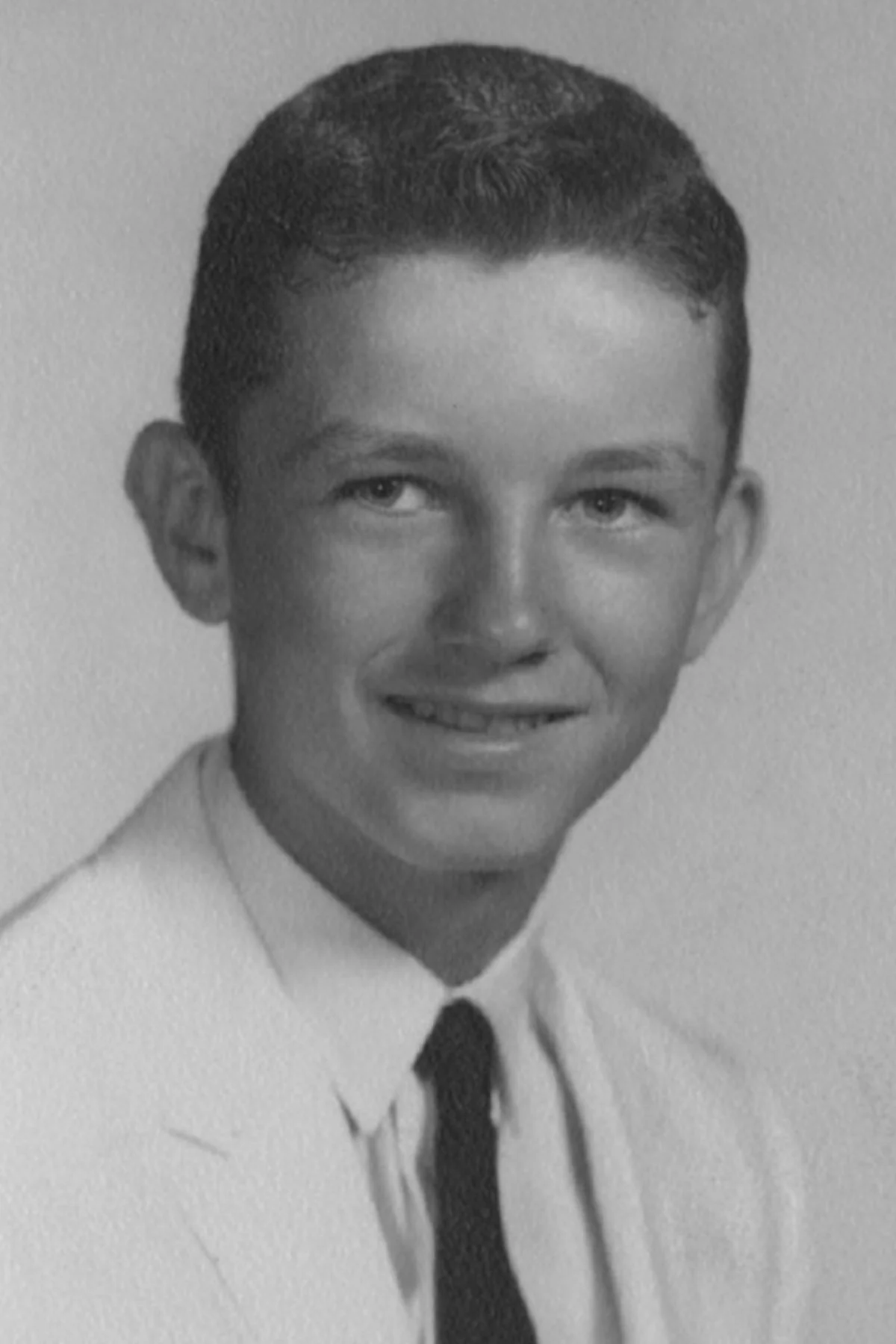
Gary Blair as a boy - Courtesy of Gary Blair
Gary Blair was born and raised on the frame-house side of White Rock Lake in East Dallas, Texas. The second-born of four children, he grew up in a classic American household. His mother was a homemaker, and his father was the breadwinner. As the eleventh of twelve siblings, Gary’s father began working at just thirteen years old to help support his large family and was never able to return to school.
Gary’s father worked full-time as a plaster foreman. Among his many responsibilities was overseeing the patchwork at the Dallas Mercantile Bank, which still looms over downtown Dallas today. Gary recalled being yanked out of bed on Saturday mornings to spend the day working alongside his dad—pushing a wheelbarrow and picking up scraps around job sites.
“I absolutely hated the work, but I loved the paycheck,” he added with a smile.
When he wasn’t working with his dad or in school, he was playing sports. Any sport that was in season, he was playing. His first coach at age six, Roland Adams, taught him what he called the “love of the game.” “A lot of people play the game, but I have an extreme passion for it–and a love of all sports,” he said, beaming.
He told me he kept a 3 channel radio in his room and he’d fall asleep listening to games. “You’d go to bed with that under the covers so mom wouldn’t hear,” he added with a laugh.
Gary joked that he was “too skinny to play football” once he got to high school, but he was “better at baseball than anything.” He won the second team All-City award his senior year and reflected on a memorable game he had at that time. On the night of his senior prom, his team was in a championship game and losing 7-0 in the second inning.
“Coach sent me around third to try and score and I ran right into the catcher and broke my glasses. I think that inspired us because we ended up coming back and winning 8-7.”
He then went straight from the game to pick up his date for prom, driving his first car—a 1955 Ford Fairlane he’d bought from his dad for $500.
Gary’s love for sports started early and ran deep. “High school athletics was everything to me,” he said. I asked him if that love was instilled in him at home, or if it was something he picked up along the way. He answered candidly.
“My mom loved sports, but my dad was more focused on his work. We never got to play catch together in the yard and I’ve always regretted that.”
Gary described their family dynamic being like the Baileys in “It’s a Wonderful Life.” “You didn’t have those meaningful conversations with your dad. At meals, we’d all sit there together quietly. But it was a good childhood. I don’t remember there being any hardships. We weren’t rich, but my dad provided, and my mom was able to stay home with us.”
In school, the class he loved most was mechanical drawing, taught by the charming Mr. Malone, who walked with a distinct limp after contracting polio as a child. “I loved landscape architecture. I loved drawing split-level houses and putting it all together. So that’s what I wanted to be—an architect.”
Sports and Education
After graduating from Bryan Adams High School in Dallas, Gary enrolled at Texas Tech to pursue a degree in architecture. Batting .273 out of high school, he joined the Red Raiders freshman team during his first year there.
On the way to their first spring game, he was pulled aside and told he didn’t have the grades or required class hours to play. His love of the game cost him academically, and he spent the rest of the season chasing balls in the outfield and joining in on team workouts.
After the spring semester in ‘64, he ended up getting expelled due to his grades and went back to Dallas to work for his dad over the summer and fall of that year. “I ran back to Tech in January of that next year, and by then my ability for baseball had gone. I switched my degree to physical education, health, and journalism.”
“You’ve got to see what else is in your gym bag—what else you can bring to the table,” he remarked, explaining that for those who can’t play professionally, there are other ways to stay involved in sports. For Gary, it was teaching.
“At Tech, I was working three jobs to pay for my education. I officiated high school, city league, and intramural sports while also working as a checker at Furr’s Supermarket.” He explained that his father stressed the importance of education, having been forced to leave school after seventh grade and never given the chance to attend high school, let alone college.
After his sophomore year in 1967, Gary traveled to California with a friend to find work for the summer. He returned to school that semester but later decided to take a year off to pursue advertising opportunities in California. “It was an impossible venture at 21, so I ended up applying for a restaurant management training program.”
“I learned the program, started running this A&W in West L.A. All of a sudden, I got transferred down to a big one in Costa Mesa; sort of like Kip's Big Boy with a one hundred and ten seater on the outside. At twenty-two and a half, I was running restaurants, working ninety-hour weeks—and loving every minute.”
By May of 1969, he had been sent to Chicago to get a low producing store back on its feet. It was during that trip that he received his draft notice, and after saying goodbye to his family in Dallas, returned to California for his physical.
“They said, ‘Son, you're going into the Army. We’re sending you to Fort Ord.’ I said, ‘No, I'm going to join the Marines.’” As one of the oldest in his platoon at twenty-three, he got his orders and was shipped out to Okinawa, Japan shortly thereafter.
“The 3rd marine division had just been pulled back from Vietnam two weeks before I got over there in November. So, I spent the whole year in Okinawa, played some baseball, played some softball, and moved straight up the ranks. I was a sergeant when I was rotating out.”
In December 1970, he rotated out of service and, as he put it, “sprinted back to Tech” to finish his degree, using his G.I. Bill to cover the costs. He earned his bachelor’s degree in 1972 and returned to complete his master’s degree in 1974.“The Marines taught me discipline and organization–tools that benefited me greatly as a coach later on,” he noted.
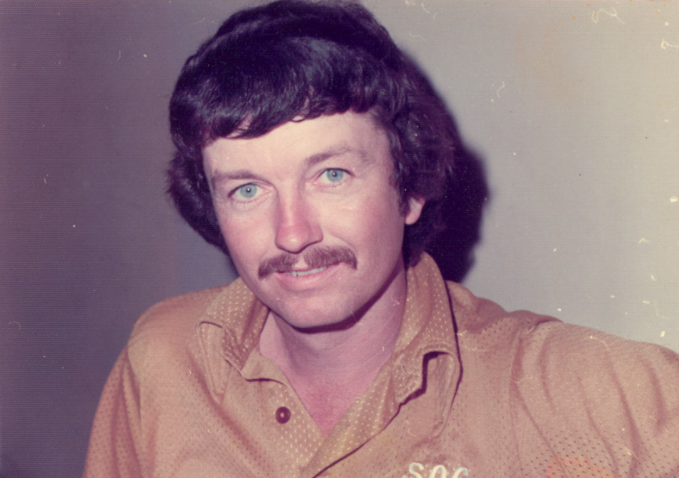
After graduating Texas Tech in 1972, he took a job as the P.E instructor at Dallas South Oak Cliff. “Integration hit in 1968. This was 1972 so the all white school I had played against in the city championship in high school was now 99 percent black.”
He noted that in the 1970s, the rise of single-parent households meant that many children were on their own between four and seven in the evening, waiting for their mothers to get home from work. Gary took it upon himself to keep those kids out of trouble.
He volunteered to be the first coach of their brand new golf team and when a few girls came into his office to ask if he’d coach their volleyball and basketball teams, he quickly accepted the role.
“If you played for me in volleyball, you also had to play basketball, and if you were going to play those sports, you also had to run track. It was about keeping the kids occupied and out of trouble until their moms got home.”
Gary became a father figure to his players. When the school buses stopped running at night, he and a handful of the senior sponsor ladies would pile the kids into their cars and make sure they got home safely.
It was around this time when the TV show “The White Shadow” came out. The show featured a former pro-basketball player who takes a job as a coach at a tough, ethnically mixed school in Los Angeles. According to IMDB, “He helps turn the team from losers to winners, both on and off the court.”
“The kids at the school started calling me the White Shadow,” he added with a boyish grin.
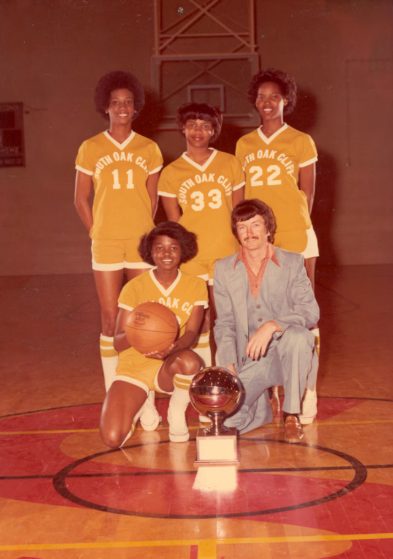
Coach Blair’s team started off the season with a bang going 18-3 and the next year keeping the momentum with a 25-5 winning streak. He explained they could only play in the inner city or some of the surrounding schools for the first two years. Once they could join the “big leagues,” they went all the way to state and only lost in the semi finals.
“We came back the next year and our girls and boys teams both ended up winning state. It was the first time an all-black school had a girls and boys team both win state championships in basketball.”
They ended up winning state again the next year, and the school asked him to be the head coach of the boys baseball team. They also invited him to be the offensive coordinator for the junior varsity football team.
“They said, ‘We'll move you up to varsity next year.’ That's when I turned down the chance to go to the men's side where all my friends were coaching. I stayed with the girls and it was the best move I ever made.”
Road to College Coach
In 1978, his team won the championship again and he started to get recognition from college schools. The University of North Texas invited him to come interview for a position working with their women’s basketball team.
“All the administrators wanted me except for the women’s senior administrator. She was not going to hire a man. I didn't get that job, and it’s the only job in my life I’ve ever been turned down for.”
He stayed with South Oak Cliff and won state again in 1980 as undefeated champions. He spoke fondly of his first team noting, “We were one of the best teams to play high school basketball. The team was that good. The majority of that team went to college on scholarships.”
I asked him what it was about that first team that made them unique. “They were some great athletes who just needed teaching, coaching, and love. They needed a father figure, because like I said, 75 percent of them were one-parent families.”
“It's not that we just had better talent than everybody. I think I understood the girls needed me and I needed them, and it just worked out.” He still stays in touch with those players, who are now in their mid to late fifties.
In the summer’s, Gary would work coaching clinics at Louisiana Tech, UNT, or Texas Woman's University to learn more about the craft. “Remember, I was an average basketball player in high school. I was always a starter for baseball but I never scored a point in varsity basketball. I learned volleyball by playing in city leagues as I was coaching my high school team.”
One of Gary’s players, Deborah Rodman, who was Dennis Rodman’s sister, got signed to Louisiana Tech. He noted that Dennis Rodman was in his P.E class. “He was not good enough for varsity or JV. That's how good South Oak Cliff was at all men's sports. He grew eight inches after high school, but his sisters who played for me were 6 '2 and 6' 0.”
Leon Barmore, who was the associate head coach of the women's team at La Tech, called Gary up to discuss a coaching opportunity. “He said, ‘Gary, we'd love for you to come down and look at us, and we want to offer you the job.’”
He knew this was a great opportunity, but it wasn’t an immediate yes.
“I had just moved into a new house and everything was going well. I thought college ball might not be it for me. At this high school, we were the kings. South Oak Cliff was well respected and we had just won three out of four state championships.”
After some deliberation and encouragement from his family, he decided to take the position, and by the fall of 1980 he had started working as an assistant coach at Louisiana Tech University. “La Tech was THE program back then. All the other programs weren’t putting money into women’s college sports yet. They had programs, but they weren’t winning.”
I asked Gary if it was hard to leave his team at South Oak Cliff after so many years, and so many wins, together. “Oh, yeah. That first night, I remember staying in this rented house in Ruston, Louisiana. It was freezing and I'm in a sleeping bag thinking, ‘What have I just done?’”
It ended up being a game-changing move for his career. His first year at La Tech, his team became undefeated national champions. The second year, they won the championship again. His team went to the final four nine years in a row and won five out of the nine times.
In 1985, Stephen F. Austin offered him a head coach position and he gladly accepted.
He earned his first collegiate head coaching win at age forty, defeating Lamar University and coach Chickie Mason. Ironically, his first loss came against Lynn Hickey at Texas A&M, followed by a second loss to his alma mater, Texas Tech, then led by Marsha Sharp.
He left Stephen F. Austin to lead the Razorbacks at the University of Arkansas in 1993 and took their program to 5 NCAA tournaments. “We coached our butts off, and I had some great assistants,” Gary said, fondly recalling his time there.
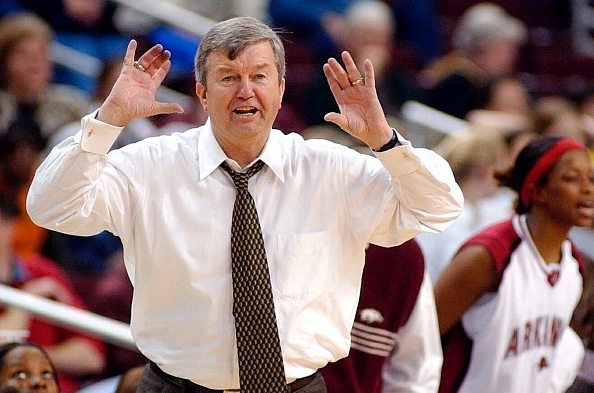

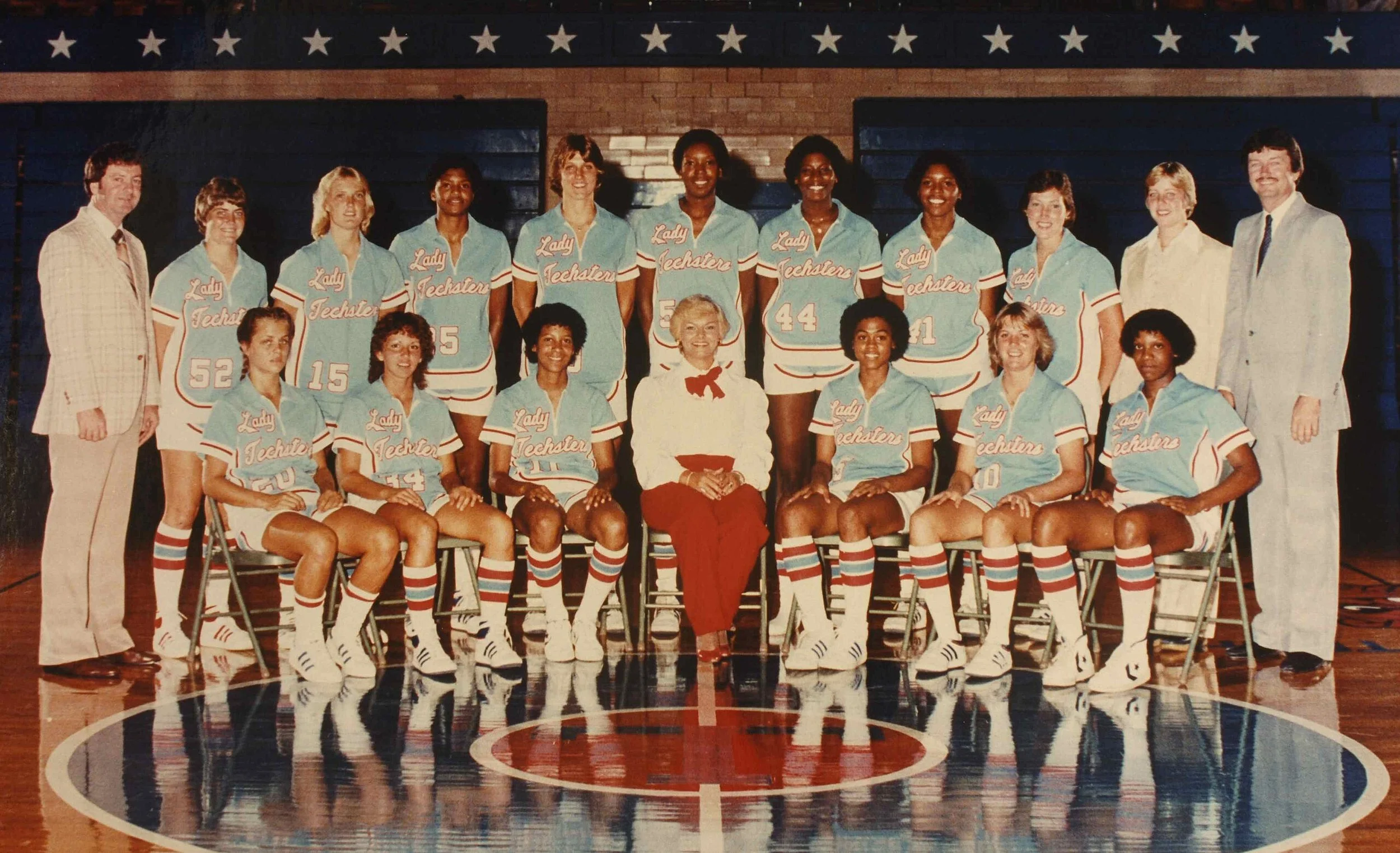
Coach Blair stayed with Arkansas for 10 seasons, leaving in 2003 to join the ranks at Texas A&M. “Bill Byrne called me and wanted me to come down and check out their program. I knew A&M could be built if I had the right people going with me. I didn't take any of my players, but Vic Schaefer and Kelly Bond went with me.”
Vic Schaefer was Gary Blair’s assistant at Arkansas from '97-'03 and he was a 1984 Aggie graduate. “I met him while I was at Stephen F. Austin and he was at Sam Houston. I rescued him because, at the time, he was the lowest-paid coach in the conference. Now he’s the fourth-highest-paid coach in the country,” he said playfully.
Joining the 12th Man
When Gary Blair joined A&M’s staff, the women’s basketball team was the worst rated team in the Big 12 Conference, and their game attendance was terribly low.
“There were no marketing directors back then. I went door to door, passing out free tickets.” He remarked that he did a radio show once where he gave out his home address and told the listeners to come by and he would give them free tickets to the game.
“Here comes a guy to my door, probably twenty-seven or twenty-eight, with no shoes on. ‘Coach, I heard you on the program. I came to get some free tickets.’ I didn’t give out where I lived after that.”
He got attendance up by 71 percent his first year at A&M. In the first three years, A&M home attendance increased 156 percent. He even set a school record with an attendance of 11,088 fans watching his team play Baylor University in February of 2006.
He showed me a magazine he had on his desk that came in a few days prior. He pointed to the photo of Robin Roberts, the famous ESPN sportscaster, and one of the first black women to join Good Morning America as a Co-Anchor in 2005.
“She’s my hero. She knows how to talk with people instead of at people. That’s what I tried to become.” He explained he’d never use a drive-thru at banks or restaurants if he could avoid it. If he was going to get a bite to eat, he was going inside to order so he could meet new people.
“I got to know people, and I got them to show up by giving them tickets. You get attendance up, and your team starts to turn around.”
Blair’s team had the most victories in the program's history, ending the 2010-11 season with a 33-5 record. He guided the women’s team to its first NCAA Final Four and ultimately to a national championship.
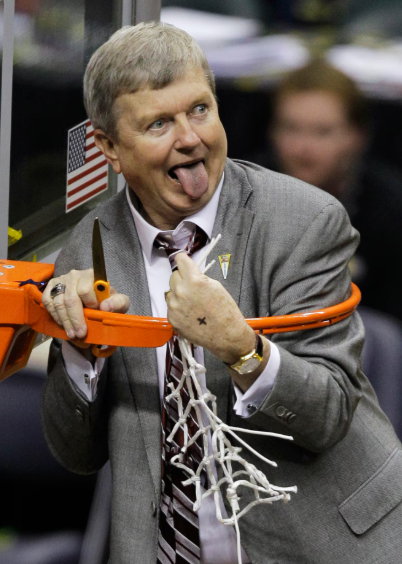
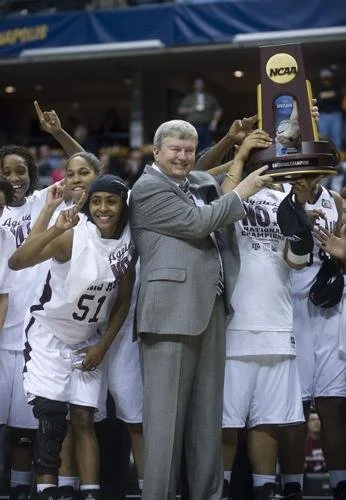
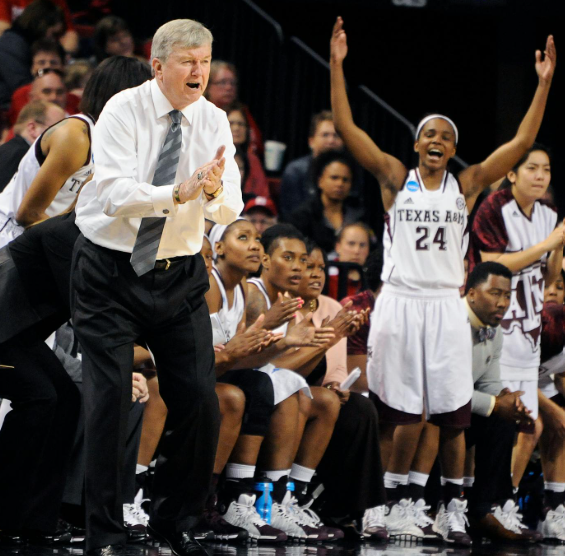
Coach Blair recalled his memorable visit to the White House after his team won the national championship. Reclining in his leather office chair, he told me the story of when he met former President Barack Obama.
“I knew he was a big basketball guy so I said, ‘Mr President, I’ve got a few players that would love to play you and Joe Biden in a pickup game.’ He said ‘I’m not playing with Joe, I’ll get Arnie (the Secretary of Education).’”
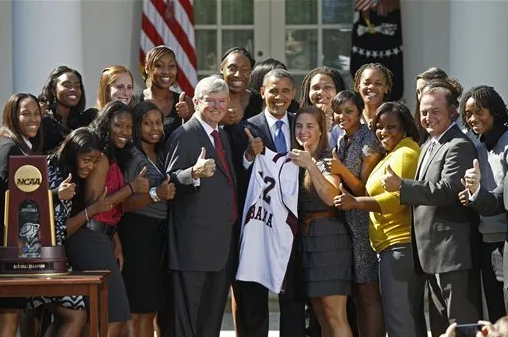
The A&M Women’s Team Meeting President Obama after 2011 NCAA Championship (AP Photo/Charles Dharapak)
In addition to his visit in 2011, Coach Blair went to the White House on two other occasions meeting Bill Clinton and George H. W. Bush.
When he announced his retirement, he had 1400 challenge coins made up that featured one of his quotes- “Today I gave everything I had. What I kept, I lost forever.” It commemorates his 50 years of coaching, naming each school he taught at around the rim.
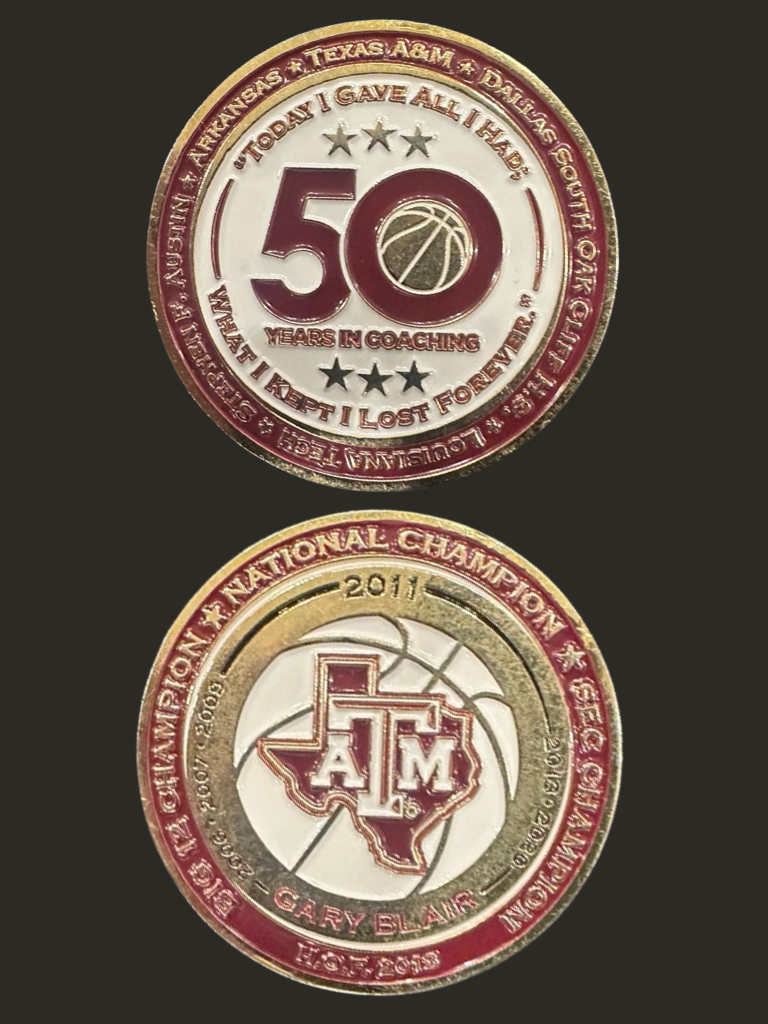
Coach Blair’s Personal Challenge Coin - Images Courtesy of Gary Blair
“Everybody asks me, ‘Is that your A&M career?’ Well, how about my La Tech career? How about those great players? How about my mentor, Leon Barmore, who I was under? Or Sonja Hogg, whom I used to call the first lady of women's basketball because she knew how to dress.”
He said it wasn’t about any single place, but about all the people who helped him along the way, shaping both the man and the coach he has become.
Gary noted that his best trait is that he “hired great people and let them work.” “I’m not going to come in and dominate practice or anything but if I hire you, you better have your stuff together.”
He is fond of Mike Elko’s (the head coach of A&M’s football team) style of coaching in that he always makes it about the team.
“I was never above the team. I hire great coaches, and I have great players. I let them work, and then I go cultivate the fans on learning what it is to love women's athletics.”
I asked him why he decided to only coach in women's sports and why he turned down his opportunities to work with the boys or men's teams. “Girls don’t think they know it all. They listen and they can be taught.” Agreed.
Advice
We began wrapping up the interview, and I was curious what his advice to new coaches or players would be. He didn’t miss a beat before responding: “Learn the history of the game. You don't have to honor the past, but you better know it. There are different ways to play the game.”
He explained how he would draw a plus sign on the top of his hand before games to remind himself to stay positive in the huddles. “Be a fun and positive coach,” he explained. “Don't be the know-it-all. You didn't invent the game.”
To the players reading: “Tune out the negativity. Learn, and gravitate towards success. Read self help books,” he stated, pointing to his 8 foot tall book shelf, stuffed to the brim with them.
Current
I asked Gary what was most important to him now that he’s retired. “I value my time with my wife. For 50 years, I was in a race against time.”
“I want to go back and watch old game reels, I haven’t even seen our championship game against Notre Dame. I'd love to go back and do it again, but there's no way I would change any of the 50 years that I had.”
“I cherish what it took for me to get to the big moments. I cherish the failures I’ve had in my life. I’ve been lucky—and it’s been a lot of fun,” he said with a wide, genuine smile.
“I’m not a storyteller, but I hope to be a story-maker,” he said, surrounded by memories. Coach, if that was the goal, I’d say you’ve more than succeeded.
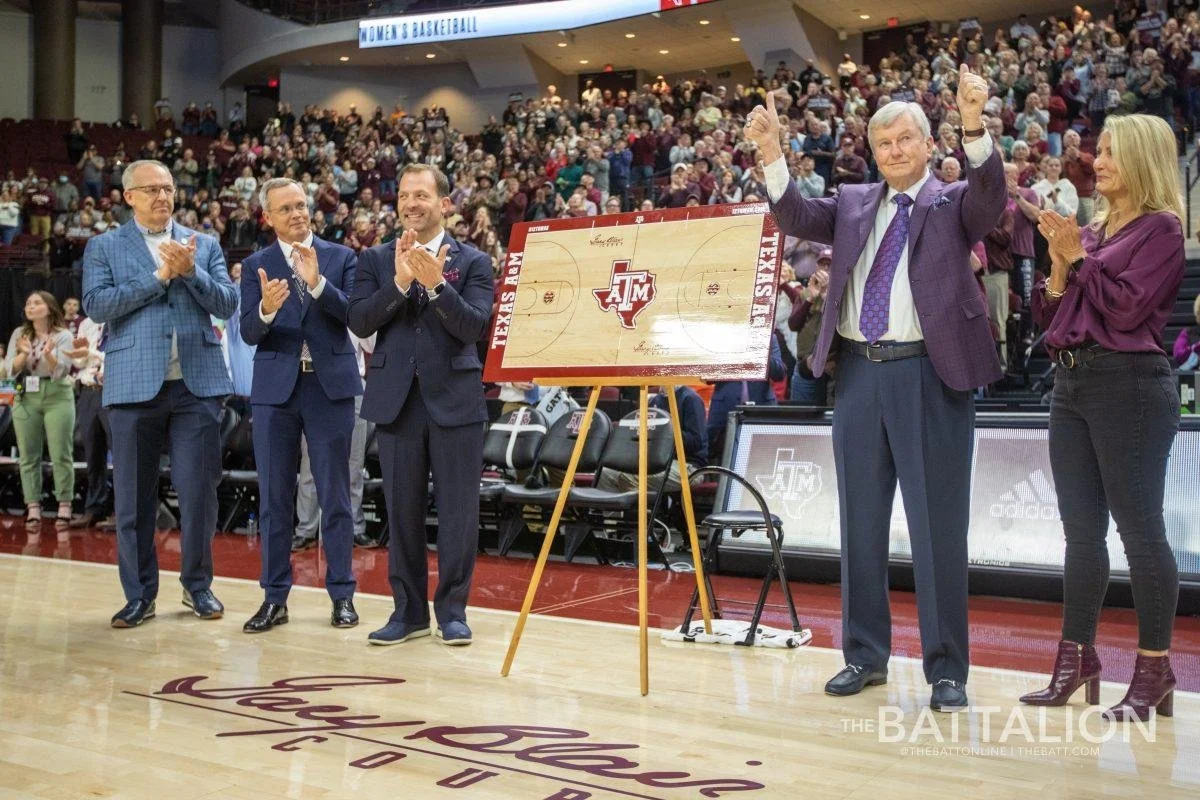
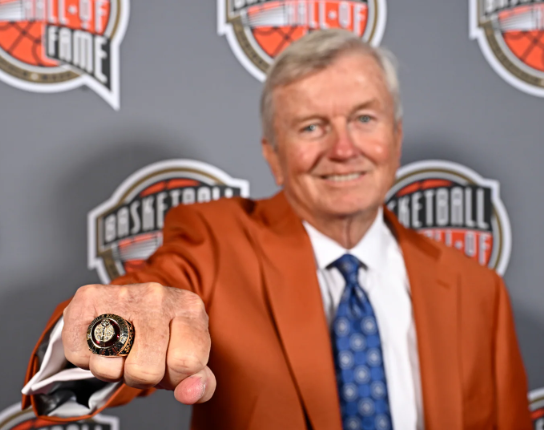
Gary Blair’s career culminated in his induction into the Naismith Memorial Basketball Hall of Fame in 2023, the Women’s Basketball Hall of Fame in 2013, and eight other halls of fame along the way. Texas A&M named the court at Reed Arena after him, announcing it before his final home game in 2022.
He is the longest tenured coach in A&M history, and holds the Aggie basketball record of 444 wins, nearly tripling the wins of his predecessor Lynn Hickey (154).
His list of accolades stretches far beyond the limits of this story. What matters most is this: he is a legend, not just to Aggie fans, but to women’s athletics as a whole.
How To Win
Coach Blair, knowingly or unknowingly, has surrounded himself with excellence since he was a young man. One of his former teammates at Texas Tech, Donny Anderson, ended up being a first round draft pick for the Green Bay Packers in 1965, and he played professionally for nine years following his time with the Red Raiders.
In his speech at the Naismith Award ceremony, Gary stated that “the key to success is to surround yourself with great people.” He humbly spoke about the successes he has had, on and off the court, and noted that it was due to his wonderful friends, family, and mentors-and a fair amount of luck–that he got to where he is today.
Throughout our interview, he returned again and again to the importance of relationships, rather than the wins and accolades he could have easily highlighted.
Even while we sat in his office, surrounded by hundreds of photos, memorabilia, trophies, and gifts signed by famous players, it was evident to me that his successes aren’t how he defines himself.
With a soft smile, Gary spent two hours with me, answering every question with raw honesty, and taking it on the nose as I stumbled around his office trying to set up my tripod for photos and videos. I’ve met people with far less credibility who were far more conceited—and yet here stood a ten-time Hall of Fame champion welcoming me into his home as though I belonged there.
It’s no wonder why Coach Blair is a beloved figure in my community. His level of kindness and generosity can rarely be found these days. It just goes to show that when you treat people with respect and decency, you’ll always be a winner.
All sources are linked in this story and added to the image bodies. Photo credit can be found in image notes.
